Building a Data-Driven Content Marketing Strategy Framework
A step-by-step framework for creating a content marketing strategy that drives organic traffic, engages your audience, and generates measurable business results.

Key Takeaways
- Align content creation with specific audience buyer personas and their search intent to maximize conversion rates.
- Integrate keyword research into the planning phase to target topics with high traffic potential and low competition.
- Establish a consistent editorial calendar to maintain publishing velocity and build search engine crawl authority.
A successful content marketing strategy requires more than just publishing blog posts regularly. It demands research, planning, execution, and measurement aligned with business objectives.
1. The Content Marketing Framework
Audience Research
Understanding your target audience is the foundation of effective content marketing. Create detailed buyer personas that include demographics, pain points, information needs, and content consumption preferences.
Keyword Research Integration
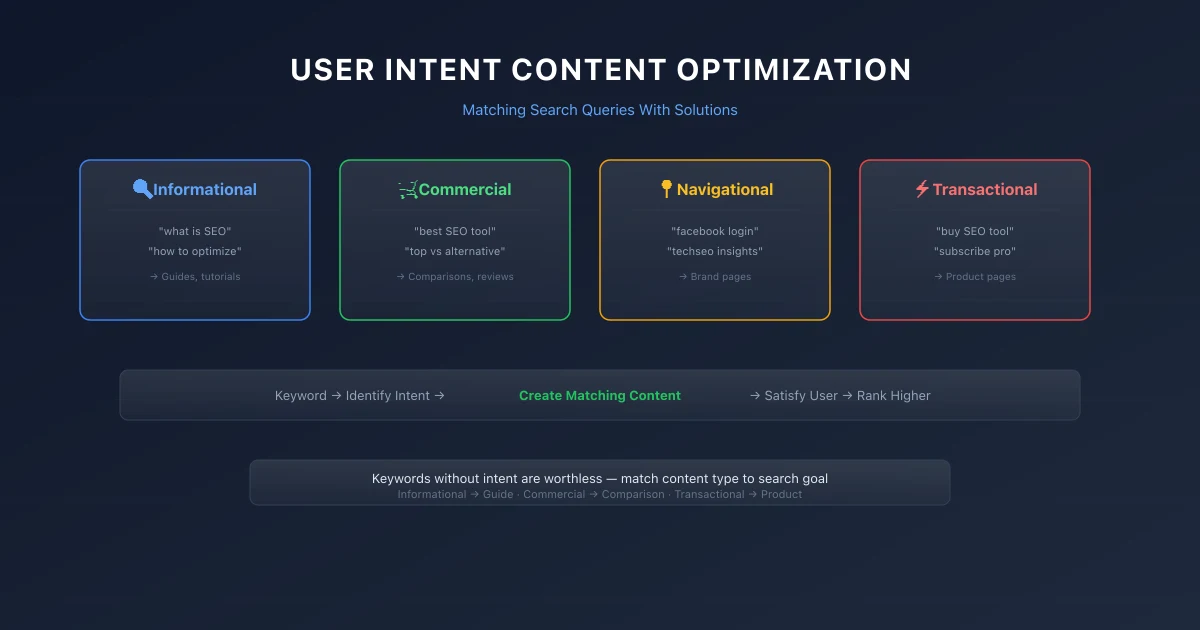
Content marketing and SEO must work together. Use keyword research to identify topics your audience is searching for, analyze search intent to match content formats with user needs, and find gaps in existing content that you can fill.
Content Planning
Develop a content calendar that balances different content types and formats. Include pillar pages, blog posts, guides, case studies, and supporting content. Each piece should serve a specific purpose in your customer journey.
2. Measuring Success
Track metrics that matter. Go beyond page views to measure engagement, conversions, and attribution. Use tools like Google Analytics, Search Console, and content analytics platforms to understand what works.
3. Conclusion
A data-driven content marketing strategy produces sustainable results. Focus on quality over quantity, measure what matters, and continuously refine your approach based on performance data.
4. High-Quality Content Optimization Checklist
- Verify Search Intent: Match content structure to target query type.
- E-E-A-T Assessment: Include original insights, author credentials, and fact-checked claims.
- Structured Heading Hierarchy: Use one H1, followed by H2 and H3 subsections.
- Anchor Text Relevance: Use descriptive, target-focused anchor text for internal links.
- Mobile Parity Check: Verify that mobile viewports render all key paragraphs and embeds.
5. Common Mistakes
- →Targeting Search Volume Over Intent: Creating high-volume informational pieces when the query has a commercial purchase intent leads to zero conversions.
- →Failing to Track Engagement Metrics: Focusing purely on organic sessions while ignoring average engagement time can hide the fact that content is thin or unhelpful.
- →Ignoring Content Decay: Publishing new posts while letting older, high-ranking pages decay without refreshes leads to a drop in overall domain visibility.
- →Publishing AI content without human editing: Raw AI output lacks personal experience and original expert points, violating search guidelines.
6. When This Does Not Apply
- →Breaking News Media: Real-time reporting blogs prioritizing publishing velocity do not need deep topic clusters, complex metadata, or historical updates.
- →Internal Strategy & Client Reporting: Confidential data analysis presentations or internal dashboard reports do not require public-facing metadata, indexing, or Schema markups.
7. Official References
Frequently Asked Questions
What is search intent in content marketing?
Search intent is the primary goal a user has when typing a query into a search engine. Matching your content to the user's intent (informational, navigational, commercial, or transactional) is critical for ranking.
How does a topic cluster model work?
A topic cluster model groups related content around a central pillar page. Linking cluster articles to the pillar page signals deep topical authority to search engine crawlers.
How do I measure the ROI of my content marketing strategy?
Track conversions, click-through rates, and organic traffic value alongside business KPIs like lead generation, customer acquisition cost (CAC), and customer lifetime value (LTV).

Founder & Editor, TechSEO Insights
Mehul Makavana writes practical SEO, AI tools, and web development guides based on hands-on research, testing, and real website optimization work.
Stay Updated
Get the latest articles and SEO insights delivered to your inbox.
Privacy Note: By subscribing, you agree to receive our newsletter (Lawful Basis: Consent). We retain your email address until you choose to unsubscribe. For more details, view our Privacy Policy.