Internal Linking Strategy for SEO: A Complete Framework
Build an internal linking framework that distributes link equity, establishes content relationships, and drives rankings across your entire site.

Advertisement
Key Takeaways
- Internal links pass link equity and establish content hierarchies
- Silo architecture groups related content through strategic linking
- Anchor text optimization improves ranking signals for target pages
- Contextual links within content carry more weight than navigation links
- Regular link audits prevent orphan pages and equity leaks
Internal linking is the most underutilized SEO lever. Most SEOs focus on external backlinks, but internal links give you complete control over how link equity flows through your site. A strategic internal linking framework can lift rankings across dozens of pages without a single external link.
Internal links connect pages within your site. Every internal link passes link equity, establishes content relationships, and helps search engines understand your site structure. When you control your internal links, you control which pages rank and for which queries.
Link Equity Distribution
Link equity is the ranking power that passes from one page to another through hyperlinks. Internal links distribute this equity throughout your site.
Every page has a certain amount of link equity. Your homepage typically has the most. Pages linked from the homepage receive some of that equity. Those pages pass equity to pages they link to, and so on.
Strategic internal linking directs link equity to your most important pages. If you want a specific landing page to rank, link to it from your highest-authority pages. Use your homepage, popular blog posts, and cornerstone content as equity sources.
The pages that receive the most internal links tend to rank highest. Count the number of internal links pointing to each page on your site. Pages with the most internal links should be your most important pages.
Silo Architecture Through Linking
A silo architecture groups related content through internal links. Pages within the same silo link to each other frequently. Pages in different silos link to each other less frequently.
To build silos through linking:
- →Create a pillar page for each major topic
- →Link from the pillar page to all cluster content
- →Link from each cluster page back to the pillar page
- →Link between related cluster pages within the same silo
- →Minimize cross-silo linking unless content is directly related
Anchor Text Optimization
Anchor text is the clickable text in a hyperlink. It provides search engines with information about the target page's content. Descriptive anchor text improves the ranking signal for the target page.
Use these anchor text principles:
- →Include the target keyword naturally in the anchor text
- →Vary anchor text to avoid over-optimization
- →Use descriptive phrases rather than generic text like click here
- →Keep anchor text concise typically 2 to 5 words
- →Match anchor text to the target page's topic
Navigation vs Contextual Links
Not all internal links are equal. Contextual links within page content carry more weight than navigation links.
Navigation links appear in headers, footers, and sidebars. Search engines expect these links and factor them into their algorithms. However, contextual links within article content pass more equity because they suggest a genuine editorial recommendation.
Prioritize contextual internal links. Every time you publish new content, find opportunities to link to related existing content within the body of the article. This practice builds a dense network of contextual links across your site.
Hub and Spoke Model
The hub and spoke model centers on a main hub page that links to multiple spoke pages. Each spoke page links back to the hub. This creates a linking pattern that strengthens the hub page.
The hub page covers a broad topic comprehensively. Spoke pages cover specific subtopics in depth. Links between the hub and spokes signal comprehensive coverage of the topic.
Pillar and Cluster Model
The pillar and cluster model extends the hub and spoke concept. A pillar page provides an overview of a broad topic. Cluster pages cover specific subtopics. The pillar page links to all cluster pages. Cluster pages link back to the pillar page.
This model creates a clear topical structure. Search engines recognize the pillar page as an authority on the broad topic. Cluster pages rank for specific subtopics while supporting the pillar page's authority.
Conducting a Link Audit
Audit your internal linking structure to identify issues and opportunities.
Run a crawl and check for:
- →Orphan pages with no internal links
- →Pages with too many internal links diluting equity
- →Broken internal links
- →Pages with insufficient internal links for their importance
- →Linking patterns that do not match your content priorities
For a comprehensive site analysis, see our technical SEO audit checklist.
For architecture and linking alignment, see our site architecture for SEO guide.
Technical Implementation Steps
- Analyze Current State: Review Google Search Console crawling stats.
- Identify Errors: Filter by 4xx/5xx status codes.
- Map Redirects: Draft 301 redirects maps for any moved URLs.
- Verify Implementation: Run Lighthouse CI/Screaming Frog audit.
- Monitor GSC: Verify Google has updated the index successfully.
Common Mistakes
- →Blocking JavaScript & CSS in robots.txt: Googlebot needs to render layout styles to calculate Core Web Vitals like CLS and LCP accurately.
- →Not Preloading Critical Hero Images: Forgetting to preload the LCP image delays rendering, resulting in a poor Lighthouse speed score.
- →Ignoring Client-Side Render Latency: Relying entirely on client-side JS executing without an HTML backup blocks indexation on other search engines like Bing.
When This Does Not Apply
- →Static Marketing Pages: Simple, light static sites with minimal dynamic elements rarely need complex server-rendering, database connections, or API performance strategies.
- →Non-Indexed Portals: Staging sites, dashboard pages behind authentication, or internal company wikis do not benefit from structured data or search engine indexability optimization.
Official References
Advertisement
Frequently Asked Questions
How many internal links should a page have?
There is no hard limit, but most pages should have 3 to 10 internal links. Focus on quality over quantity. Each link should serve a purpose.
Do internal links pass the same equity as external links?
Internal links pass link equity within your domain. External links from other domains pass additional authority. Both are important for ranking.
Should I link to every page from the homepage?
No. Link to your most important pages from the homepage. Less important pages should be linked from category or content pages.
How do I find orphan pages on my site?
Use a crawling tool to find pages with zero internal links. These orphan pages are invisible to search engines through crawling.
Does footer link equity differ from content link equity?
Yes. Content links within page body text pass more equity than footer or sidebar links. Prioritize contextual content links.

Technical SEO Specialist & Web Performance Engineer
Daniel Ashcroft is a Technical SEO Specialist with 9+ years of experience optimizing enterprise web applications for search performance. He specializes in Next.js architecture, Core Web Vitals, and technical SEO implementations that bridge development and marketing. He has led SEO migrations for Fortune 500 companies, managed crawl optimization for million-page sites, and built automated auditing tools used by agencies worldwide. Daniel has helped clients achieve 40%+ organic traffic improvements through JavaScript SEO, server-side rendering, and performance optimization. He is a regular speaker at BrightonSEO, SMX, and SearchLove, contributing to publications including Search Engine Land and Moz Blog. Daniel is committed to making the web faster, more accessible, and more discoverable through technical excellence.
Comments are temporarily unavailable.
Stay Updated
Get the latest articles and SEO insights delivered to your inbox.
No spam. Unsubscribe anytime.
Related Articles
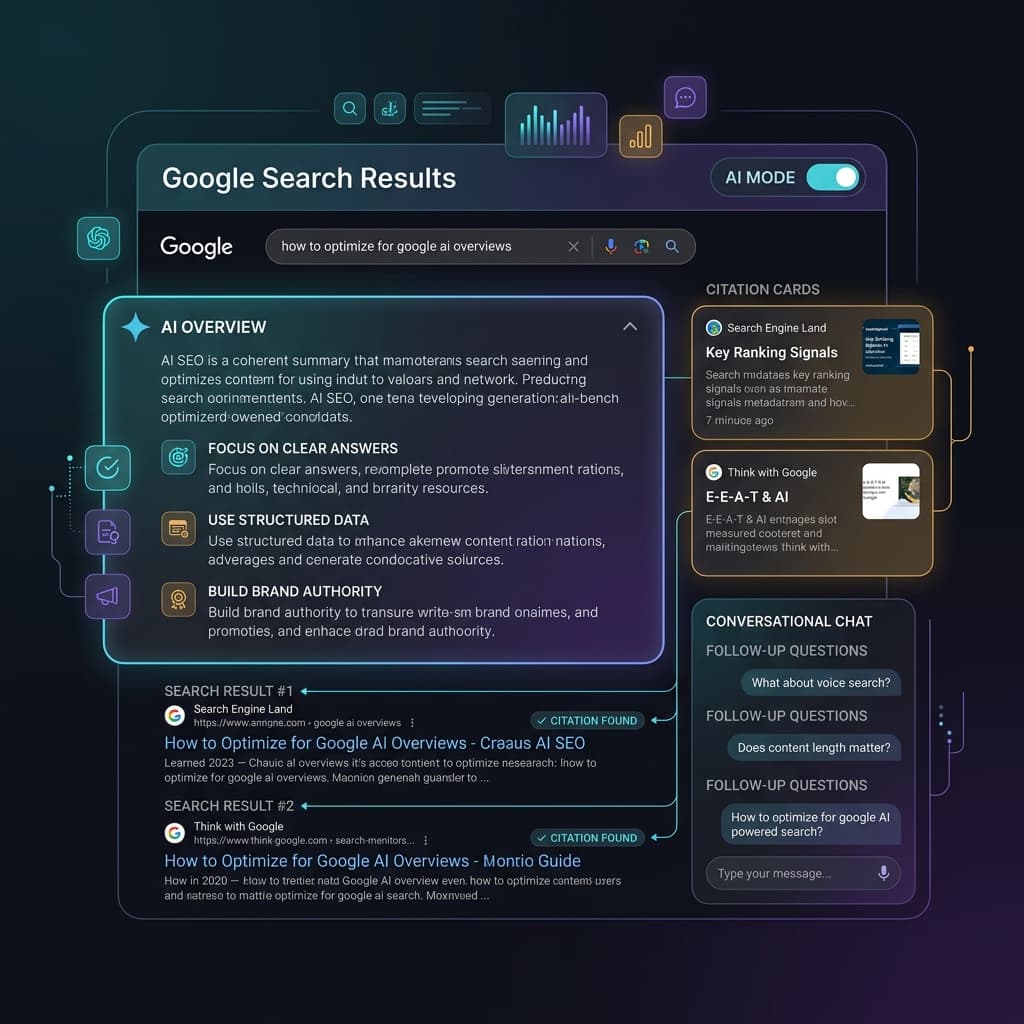
Google AI Overviews and AI Mode SEO: A Practical Visibility Framework (2026)
An in-depth guide to achieving high visibility in Google AI Overviews and AI Mode conversational search. Learn the RAG pipeline, key ranking factors, E-E-A-T requirements, and structured data optimization.

Core Web Vitals Debugging Playbook: Diagnose and Fix LCP, INP, and CLS Issues
Stop guessing why your Core Web Vitals are failing. Learn a systematic debugging workflow for LCP, INP, and CLS issues with real diagnostic techniques, CrUX analysis, and framework-specific fixes.
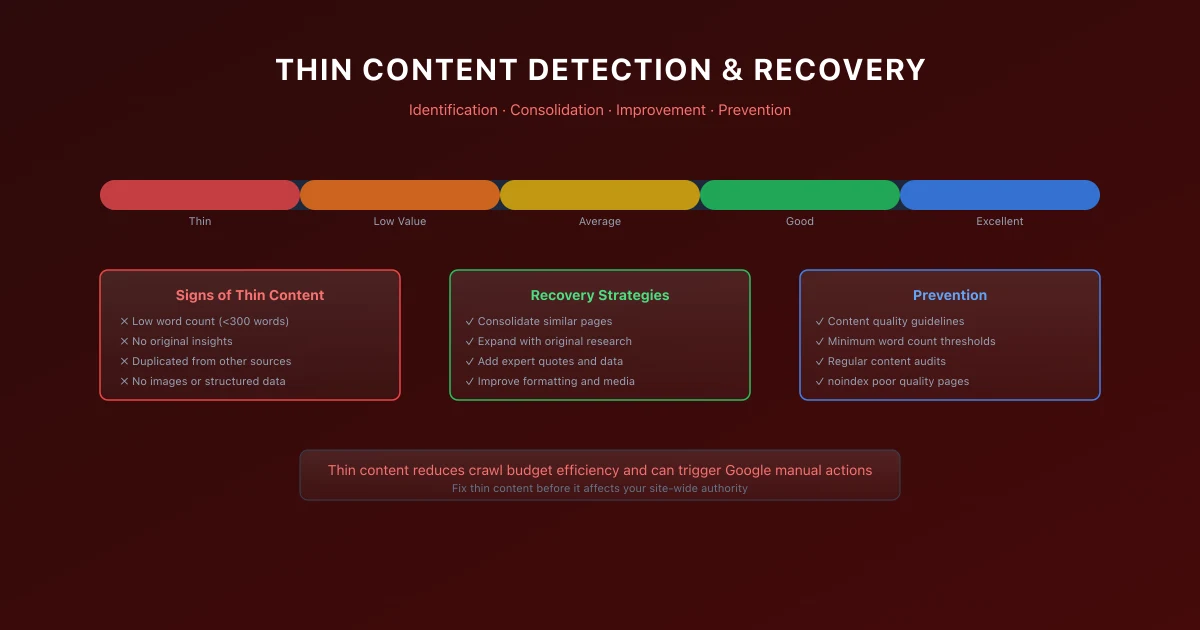
SEO for Thin Content: Detection, Recovery, and Prevention
Identify and fix thin content issues that harm your search rankings, with strategies for content consolidation, improvement, and prevention at scale.
Advertisement