Voice Search Optimization: Preparing for the Conversational Future
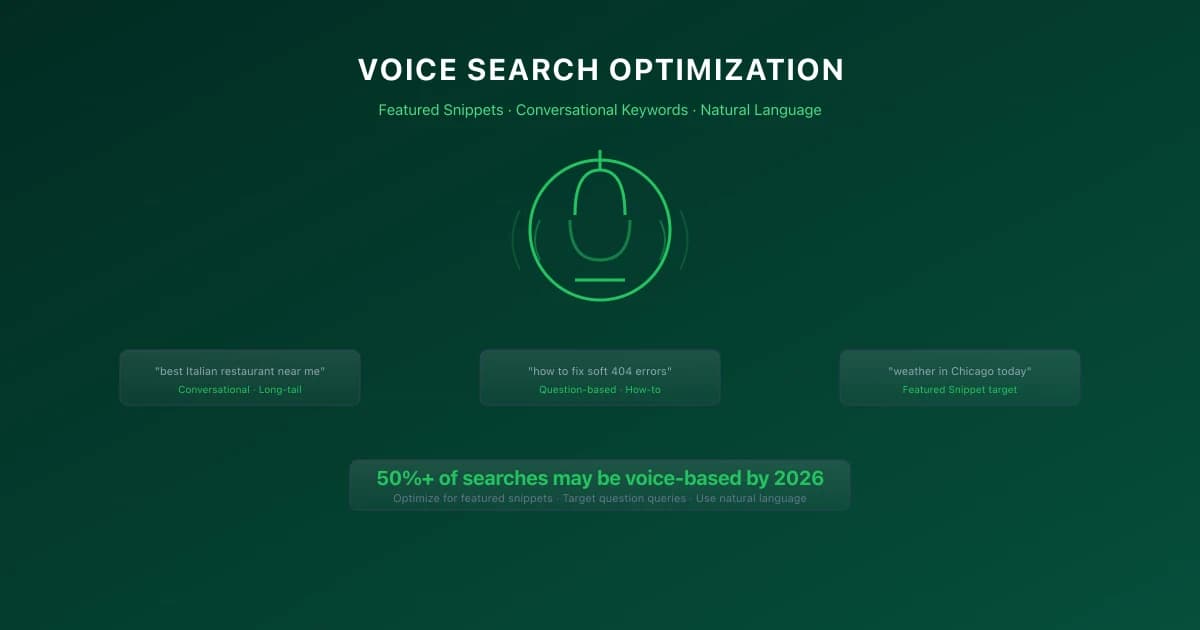
Optimize content for voice search with featured snippets, conversational keywords, and natural language patterns.
Advertisement
Key Takeaways
- Voice queries are longer and more conversational than text queries
- Featured snippets are the primary voice search answer source
- FAQ schema [markup](/blog/structured-data-markup-guide-2026) increases voice search eligibility
- Page speed and mobile optimization are critical for voice search
By 2026, over 50 percent of searches may be voice-based. Voice queries are longer, more conversational, and typically answered from featured snippets.
Optimizing for Featured Snippets
Structure content around questions using the exact question as H2. Provide a direct 40-60 word answer. Use lists for procedural questions.Conversational Keywords
Target natural language patterns. Use tools like AnswerThePublic for question research.Technical Requirements
Optimize Core Web Vitals and mobile experience. Implement FAQPage schema. Maintain a complete GBP for local voice searches.For foundational practices, see our technical SEO audit checklist.
For user-focused content, see our guide to SEO-friendly content.
Technical Implementation Steps
- Analyze Current State: Review Google Search Console crawling stats.
- Identify Errors: Filter by 4xx/5xx status codes.
- Map Redirects: Draft 301 redirects maps for any moved URLs.
- Verify Implementation: Run Lighthouse CI/Screaming Frog audit.
- Monitor GSC: Verify Google has updated the index successfully.
Common Mistakes
- →Blocking JavaScript & CSS in robots.txt: Googlebot needs to render layout styles to calculate Core Web Vitals like CLS and LCP accurately.
- →Not Preloading Critical Hero Images: Forgetting to preload the LCP image delays rendering, resulting in a poor Lighthouse speed score.
- →Ignoring Client-Side Render Latency: Relying entirely on client-side JS executing without an HTML backup blocks indexation on other search engines like Bing.
When This Does Not Apply
- →Static Marketing Pages: Simple, light static sites with minimal dynamic elements rarely need complex server-rendering, database connections, or API performance strategies.
- →Non-Indexed Portals: Staging sites, dashboard pages behind authentication, or internal company wikis do not benefit from structured data or search engine indexability optimization.
Official References
Advertisement
Frequently Asked Questions
How do I optimize for voice without losing text rankings?
Voice optimization aligns with good SEO. Both benefit from featured snippet optimization.
Do I need separate content for voice search?
No. The same content works for both when optimized for snippets.
How important is local SEO for voice search?
Very. A significant percentage of voice searches have local intent.

Technical SEO Specialist & Web Performance Engineer
Daniel Ashcroft is a Technical SEO Specialist with 9+ years of experience optimizing enterprise web applications for search performance. He specializes in Next.js architecture, Core Web Vitals, and technical SEO implementations that bridge development and marketing. He has led SEO migrations for Fortune 500 companies, managed crawl optimization for million-page sites, and built automated auditing tools used by agencies worldwide. Daniel has helped clients achieve 40%+ organic traffic improvements through JavaScript SEO, server-side rendering, and performance optimization. He is a regular speaker at BrightonSEO, SMX, and SearchLove, contributing to publications including Search Engine Land and Moz Blog. Daniel is committed to making the web faster, more accessible, and more discoverable through technical excellence.
Comments are temporarily unavailable.
Stay Updated
Get the latest articles and SEO insights delivered to your inbox.
No spam. Unsubscribe anytime.
Related Articles
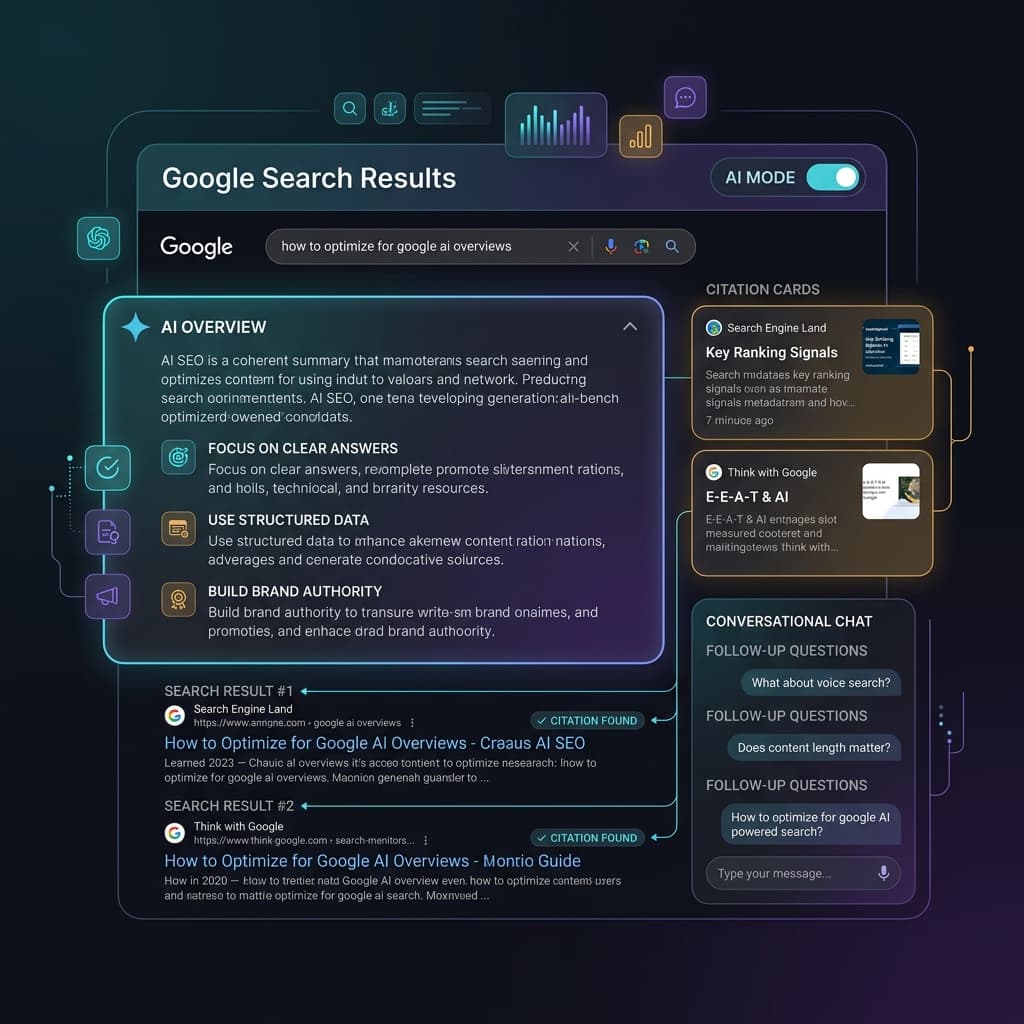
Google AI Overviews and AI Mode SEO: A Practical Visibility Framework (2026)
An in-depth guide to achieving high visibility in Google AI Overviews and AI Mode conversational search. Learn the RAG pipeline, key ranking factors, E-E-A-T requirements, and structured data optimization.

Core Web Vitals Debugging Playbook: Diagnose and Fix LCP, INP, and CLS Issues
Stop guessing why your Core Web Vitals are failing. Learn a systematic debugging workflow for LCP, INP, and CLS issues with real diagnostic techniques, CrUX analysis, and framework-specific fixes.

Internal Linking Strategy for SEO: A Complete Framework
Build an internal linking framework that distributes link equity, establishes content relationships, and drives rankings across your entire site.
Advertisement