Content Distribution Channels: How to Get Your Content Seen
Master content distribution across owned, earned, and paid channels to maximize the reach and impact of every piece of content you create.

Advertisement
Key Takeaways
- Distribution is as important as creation, invest at least 40 percent of your content budget on promotion
- Owned channels give you the most control but require an existing audience
- Earned channels build credibility through third-party validation
- Paid channels accelerate reach but require ongoing investment
- The best distribution [strategies](/blog/ecommerce-seo-strategies) use a mix of all three channel types
- Repurpose content for each distribution channel rather than sharing the same format everywhere
Creating great content is only half the battle. The other half is getting that content in front of the right people. Most content marketing teams spend 80 percent of their budget on creation and 20 percent on distribution. The most successful teams reverse those numbers.
Content distribution is the process of promoting your content through various channels to reach your target audience. Without a distribution strategy, even the best content will go unnoticed.
The Three Channel Types
Content distribution channels fall into three categories: owned, earned, and paid. Each serves a different purpose in your overall distribution strategy.
Owned Channels
Owned channels are platforms you control completely. Email newsletters, your website, blog, and social media profiles are owned channels. You control the content, timing, and audience targeting.
Email newsletters are the most effective owned distribution channel. Subscribers have opted in to receive your content. Open rates of 20 to 40 percent are common for well-maintained lists. Your blog archive is another owned channel where content continues to generate traffic through search over time.
The limitation of owned channels is reach. You can only distribute to people who already know about you. Owned channels alone will not grow your audience beyond your existing base.
Earned Channels
Earned channels involve third parties sharing or featuring your content. Mentions in industry publications, shares on social media, backlinks from other sites, and guest posting opportunities are earned channels.
Earned distribution is valuable because it comes with third-party validation. When an industry publication features your content, that endorsement carries weight with their audience. A single mention in a major publication can drive more traffic than months of owned channel promotion.
Earned distribution is harder to scale because it depends on other people choosing to share your content. You can influence earned distribution through quality and outreach, but you cannot control it.
Paid Channels
Paid channels let you buy access to an audience. Social media advertising, search engine marketing, native advertising, and sponsored content are paid channels.
Paid distribution is the most scalable option. You can increase reach by increasing spend. It also provides the most precise targeting. You can reach specific demographics, interests, and behaviors that match your ideal audience.
The downside is cost. Paid distribution requires ongoing investment. When you stop paying, the traffic stops. Paid channels work best for promoting high-value content that drives conversions.
Building a Distribution Strategy
Know Your Audience
Different audiences use different channels. A B2B executive audience might be reachable through LinkedIn and industry newsletters. A consumer audience might be more active on Instagram and TikTok.
Research where your target audience spends their time. Survey existing customers. Analyze social media engagement data. Look at which channels drive the most traffic to your existing content.
Match Content to Channel
Each channel has content formats that perform best. LinkedIn works well for thought leadership and industry insights. Twitter is good for quick tips and conversations. YouTube demands video content. Email newsletters work for curated content and in-depth analysis.
Adapt your content for each channel rather than sharing the same format everywhere. A blog post can become a LinkedIn carousel, a Twitter thread, and an email summary. Each version is optimized for its platform.
Create a Distribution Schedule
Plan distribution at the same time you plan content creation. For each piece of content, decide which channels you will use, what format adaptations are needed, and when you will publish on each channel.
A typical distribution schedule for a major piece of content might include email announcement on publication day, social media posts across three platforms staggered over one week, outreach to industry publications in week two, and paid promotion for top-performing content in week three.
Distribution Tactics That Work
Email Newsletter Promotion
Your email list is your most valuable distribution asset. Send a dedicated email for major content pieces. Include a compelling subject line that makes subscribers want to open. Write a brief introduction that explains why this content matters to them.
Segment your list based on interests. Not every subscriber needs to see every piece of content. Send content about content marketing to subscribers who have engaged with content marketing topics before.
Social Media Optimization
Each social platform requires a different approach. On LinkedIn, share insights and opinions alongside your content. On Twitter, use threads to summarize key points. On Instagram, use visual snippets that drive curiosity.
Post at optimal times for each platform. Test different posting frequencies. Engage with comments to extend the reach of your posts.
Community Engagement
Participate in online communities where your audience gathers. Reddit, industry forums, Slack communities, and Facebook groups are all potential distribution channels.
Share your content when it genuinely answers a question or solves a problem. Do not spam communities with links. Build reputation first through valuable contributions, then share your content as part of your ongoing participation.
Measuring Distribution Success
Track the performance of each distribution channel separately. Measure reach, engagement, traffic, and conversions by channel. This data tells you which channels deserve more investment and which need adjustment.
A channel that drives high traffic but low engagement may need different content. A channel that drives low traffic but high conversions may be worth more investment despite lower reach.
For more on building an effective content foundation, see our guide on building a data-driven content marketing strategy framework. And for growing your reach through links, see our guide on effective link building strategies that work in 2026.
High-Quality Content Optimization Checklist
- Verify Search Intent: Match content structure to target query type.
- E-E-A-T Assessment: Include original insights, author credentials, and fact-checked claims.
- Structured Heading Hierarchy: Use one H1, followed by H2 and H3 subsections.
- Anchor Text Relevance: Use descriptive, target-focused anchor text for internal links.
- Mobile Parity Check: Verify that mobile viewports render all key paragraphs and embeds.
Common Mistakes
- →Targeting Search Volume Over Intent: Creating high-volume informational pieces when the query has a commercial purchase intent leads to zero conversions.
- →Failing to Track Engagement Metrics: Focusing purely on organic sessions while ignoring average engagement time can hide the fact that content is thin or unhelpful.
- →Ignoring Content Decay: Publishing new posts while letting older, high-ranking pages decay without refreshes leads to a drop in overall domain visibility.
- →Publishing AI content without human editing: Raw AI output lacks personal experience and original expert points, violating search guidelines.
When This Does Not Apply
- →Breaking News Media: Real-time reporting blogs prioritizing publishing velocity do not need deep topic clusters, complex metadata, or historical updates.
- →Internal Strategy & Client Reporting: Confidential data analysis presentations or internal dashboard reports do not require public-facing metadata, indexing, or Schema markups.
Official References
Advertisement
Frequently Asked Questions
How many distribution channels should I use?
Focus on three to five channels where your audience is most active. Master those channels before expanding. It is better to do a few channels well than many channels poorly.
What is the best distribution channel for B2B content?
LinkedIn and email newsletters consistently perform best for B2B content distribution. Industry publications and communities are also effective for reaching B2B audiences.
Should I pay for content distribution?
Yes, for your highest-value content. Paid promotion amplifies reach and helps you test which channels work best. Start with a small budget and scale what works.
How do I get other sites to share my content?
Create content that is genuinely useful or newsworthy. Build relationships with industry journalists and bloggers before you need them. Make it easy to share with pre-written social posts and graphics.
What is the biggest mistake in content distribution?
Creating content and doing nothing to promote it. Distribution requires active effort. Schedule promotion time into your content production timeline from the start.

Technical SEO Specialist & Web Performance Engineer
Daniel Ashcroft is a Technical SEO Specialist with 9+ years of experience optimizing enterprise web applications for search performance. He specializes in Next.js architecture, Core Web Vitals, and technical SEO implementations that bridge development and marketing. He has led SEO migrations for Fortune 500 companies, managed crawl optimization for million-page sites, and built automated auditing tools used by agencies worldwide. Daniel has helped clients achieve 40%+ organic traffic improvements through JavaScript SEO, server-side rendering, and performance optimization. He is a regular speaker at BrightonSEO, SMX, and SearchLove, contributing to publications including Search Engine Land and Moz Blog. Daniel is committed to making the web faster, more accessible, and more discoverable through technical excellence.
Comments are temporarily unavailable.
Stay Updated
Get the latest articles and SEO insights delivered to your inbox.
No spam. Unsubscribe anytime.
Related Articles
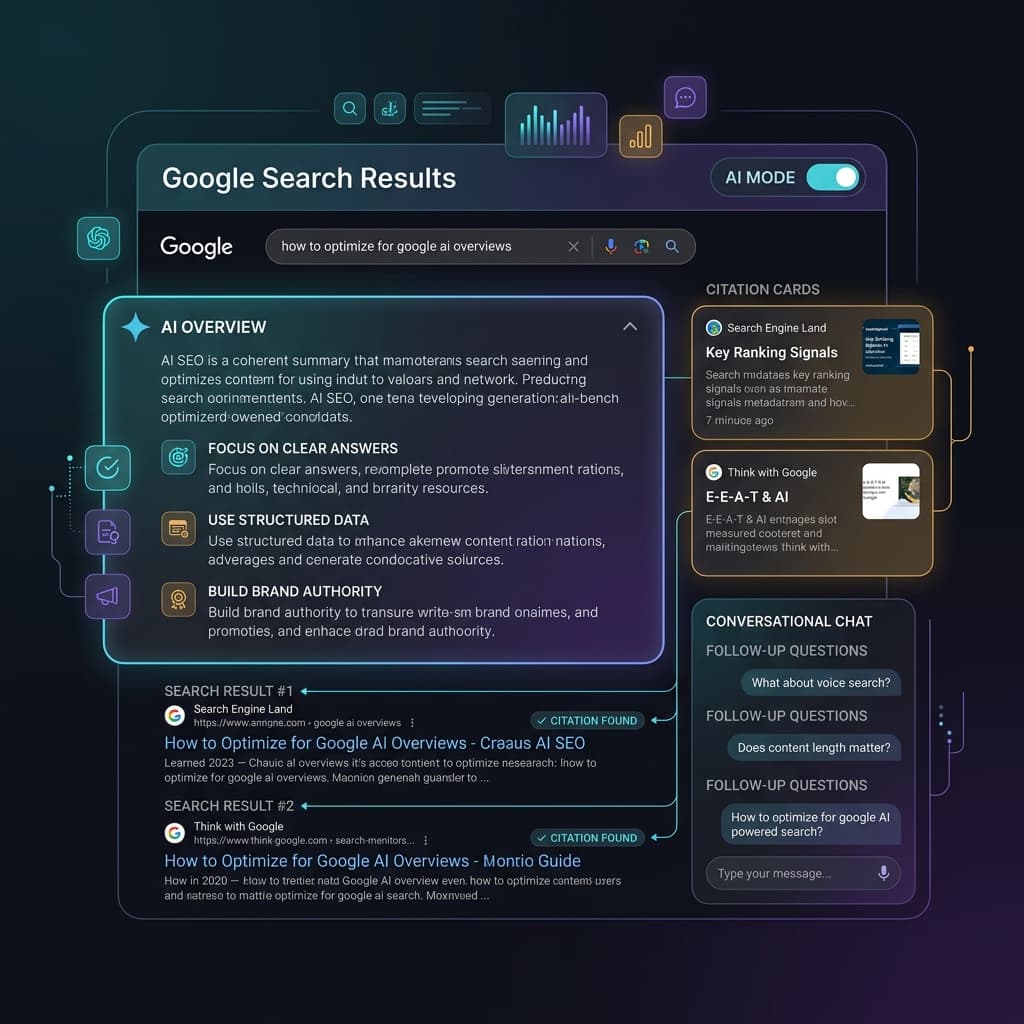
Google AI Overviews and AI Mode SEO: A Practical Visibility Framework (2026)
An in-depth guide to achieving high visibility in Google AI Overviews and AI Mode conversational search. Learn the RAG pipeline, key ranking factors, E-E-A-T requirements, and structured data optimization.

AI SEO Content Writing: Guide to Quality & Google E-E-A-T (2026)
How to use AI content writing tools (ChatGPT, Claude) for SEO without violating Google Helpful Content guidelines or losing E-E-A-T trust factors.

Measuring Content Marketing ROI: Metrics That Matter
Learn how to measure content marketing ROI with the right metrics, attribution models, and reporting frameworks that connect content to revenue.
Advertisement