Editorial Calendar Best Practices for Content Teams
Build and manage an editorial calendar that keeps your content team organized, aligned with business goals, and publishing consistently.

Advertisement
Key Takeaways
- An editorial calendar aligns content production with business objectives and marketing campaigns
- Plan content in monthly or quarterly cycles to maintain strategic focus
- Include key metadata for each piece: topic, format, target keywords, author, and publish date
- Build flexibility into your calendar for timely topics and breaking news
- Review and adjust your calendar regularly based on performance data
- The [best](/blog/nextjs-seo-best-practices) calendar is the one your team actually uses, not the one with the most features
Random publishing does not work. Publishing whenever inspiration strikes or when someone has time to write creates an inconsistent content experience for your audience. It also makes it impossible to plan strategically.
An editorial calendar solves these problems. It gives your team a shared view of what content is being created, when it will publish, and how it supports your business goals.
What Makes a Good Editorial Calendar
A good editorial calendar answers five questions for every piece of content: what are we creating, who is it for, why are we creating it, when will it be ready, and who is responsible.
The level of detail depends on your team size and workflow. A solo content creator might need a simple spreadsheet. A team of ten writers needs a shared tool with approval workflows and asset tracking.
Essential Fields
Every editorial calendar entry should include some core fields. The working title may change during development, but you need a reference for each piece. The content format tells the team whether this is a blog post, guide, video, or infographic. The target keywords guide the writer and SEO specialist. The author or owner assigns responsibility. The due date and publish date create accountability.
Add optional fields as your workflow requires. Status tracking shows whether a piece is in ideation, writing, editing, or published. The content stage such as top-of-funnel or bottom-of-funnel aligns content with the buyer journey. The category or topic cluster groups related content. The promotion channels remind the team to plan distribution.
Strategic Alignment
Your editorial calendar should connect each piece of content to a business goal. Every article should serve a purpose beyond just publishing something. It might target a specific keyword to improve rankings for that term. It might support an upcoming product launch. It might nurture leads at a specific stage of the buyer journey.
When you plan content without strategic alignment, you end up with a collection of articles that do not move your business forward. The editorial calendar forces you to think about why each piece exists.
Planning Cadences
Quarterly Planning
Quarterly planning sets the broad content themes and priorities for the next three months. Start by reviewing business goals for the quarter. What products are launching? What marketing campaigns are running? Which topics need more coverage?
Define three to five content themes for the quarter. Each theme should support a business objective. Assign rough publication dates for major pieces. Leave room for timely content that may arise during the quarter.
Monthly Refinement
Monthly planning translates quarterly themes into specific content pieces. Assign writers to each piece. Set detailed deadlines. Coordinate with other marketing activities.
Review the previous month performance. Which topics performed well? Which underperformed? Use this data to adjust the upcoming month plan.
Weekly Execution
Weekly execution focuses on the current week production. Writers confirm their assignments. Editors review what is in the pipeline. The team addresses any blockers.
A weekly content meeting of 15 to 30 minutes keeps everyone aligned. Each person shares what they are working on, what they need, and what they will complete this week.
Workflow Management
Ideation and Approval
Content ideas come from multiple sources. Keyword research reveals what people are searching for. Competitor analysis shows content gaps. Sales and customer success teams know what questions prospects ask.
Capture all ideas in a backlog. Review the backlog during planning sessions and move the best ideas into the calendar. Each idea needs a brief approval before it becomes a calendar entry. The approval ensures the idea aligns with strategy and deserves the production investment.
Creation and Review
Assign clear ownership for each piece. The writer knows they are responsible for the first draft. The editor knows they are responsible for review. The designer knows they are responsible for visuals.
Set expectations for turnaround times. How many days for a first draft? How many days for review? How many revision rounds are included? Clear expectations prevent bottlenecks.
Publication and Promotion
Publishing is not the end of the workflow. The calendar should include promotion tasks. Who writes the email announcement? Who creates social media posts? Who handles outreach to industry publications?
Include a post-publication review after 30 days. Did the content perform as expected? What would you do differently next time? These reviews improve your planning over time.
Tools for Editorial Calendars
The right tool depends on your team size and complexity. Spreadsheets work for solo creators and small teams. Google Sheets and Airtable are common choices. They are flexible and free.
Dedicated content planning tools offer more features. CoSchedule, Asana, Trello, and Monday.com all support editorial calendar workflows. They provide calendar views, task assignments, and approval workflows.
Your CMS may include editorial calendar features. WordPress has editorial calendar plugins. HubSpot includes content planning tools. Use what your team already has before adding new tools.
For more on building a strategic content foundation, see our guide on building a data-driven content marketing strategy framework. And for measuring content performance, see our guide on using analytics data to optimize your content performance.
High-Quality Content Optimization Checklist
- Verify Search Intent: Match content structure to target query type.
- E-E-A-T Assessment: Include original insights, author credentials, and fact-checked claims.
- Structured Heading Hierarchy: Use one H1, followed by H2 and H3 subsections.
- Anchor Text Relevance: Use descriptive, target-focused anchor text for internal links.
- Mobile Parity Check: Verify that mobile viewports render all key paragraphs and embeds.
Common Mistakes
- →Targeting Search Volume Over Intent: Creating high-volume informational pieces when the query has a commercial purchase intent leads to zero conversions.
- →Failing to Track Engagement Metrics: Focusing purely on organic sessions while ignoring average engagement time can hide the fact that content is thin or unhelpful.
- →Ignoring Content Decay: Publishing new posts while letting older, high-ranking pages decay without refreshes leads to a drop in overall domain visibility.
- →Publishing AI content without human editing: Raw AI output lacks personal experience and original expert points, violating search guidelines.
When This Does Not Apply
- →Breaking News Media: Real-time reporting blogs prioritizing publishing velocity do not need deep topic clusters, complex metadata, or historical updates.
- →Internal Strategy & Client Reporting: Confidential data analysis presentations or internal dashboard reports do not require public-facing metadata, indexing, or Schema markups.
Official References
Advertisement
Frequently Asked Questions
How far ahead should I plan my editorial calendar?
Plan quarterly themes and major pieces three months ahead. Fill in specific topics monthly. Leave 20 to 30 percent of your calendar flexible for timely content.
How do I handle content ideation for the calendar?
Maintain a running backlog of ideas from keyword research, competitor analysis, customer questions, and team input. Review the backlog during planning sessions and move the best ideas into the calendar.
What if content takes longer than planned?
Build buffer time into your schedule. Plan to publish fewer pieces than your maximum capacity. Rushing content reduces quality and stresses your team.
How do I prioritize content in the calendar?
Prioritize based on business impact. Content that supports [revenue](/blog/ecommerce-seo-strategies) goals comes first. Content that fills important topic gaps comes next. Content that is nice to have fills remaining slots.
Should I share my editorial calendar with stakeholders?
Yes. Share a simplified version with executives and stakeholders. They need to see themes and major pieces, not individual task assignments. Transparency builds trust and shows the value of your content operation.

Content Marketing Strategist & SEO Writer
Hannah Blake is a Content Marketing Strategist with 7+ years of experience driving organic growth for SaaS and e-commerce brands. She combines journalistic storytelling with data-driven SEO to create content that ranks, converts, and builds authority. Hannah has developed content strategies that generated over 2 million organic sessions annually for B2B technology companies, and her writing has been featured in Forbes, Entrepreneur, and Search Engine Journal. She specializes in topic cluster modeling, search intent analysis, content gap analysis, and conversion-focused content optimization. Hannah holds a degree in Journalism from the University of Cambridge and is certified in Google Analytics 4 and HubSpot Content Marketing. She regularly teaches workshops on content strategy and SEO writing for emerging marketers.
Comments are temporarily unavailable.
Stay Updated
Get the latest articles and SEO insights delivered to your inbox.
No spam. Unsubscribe anytime.
Related Articles
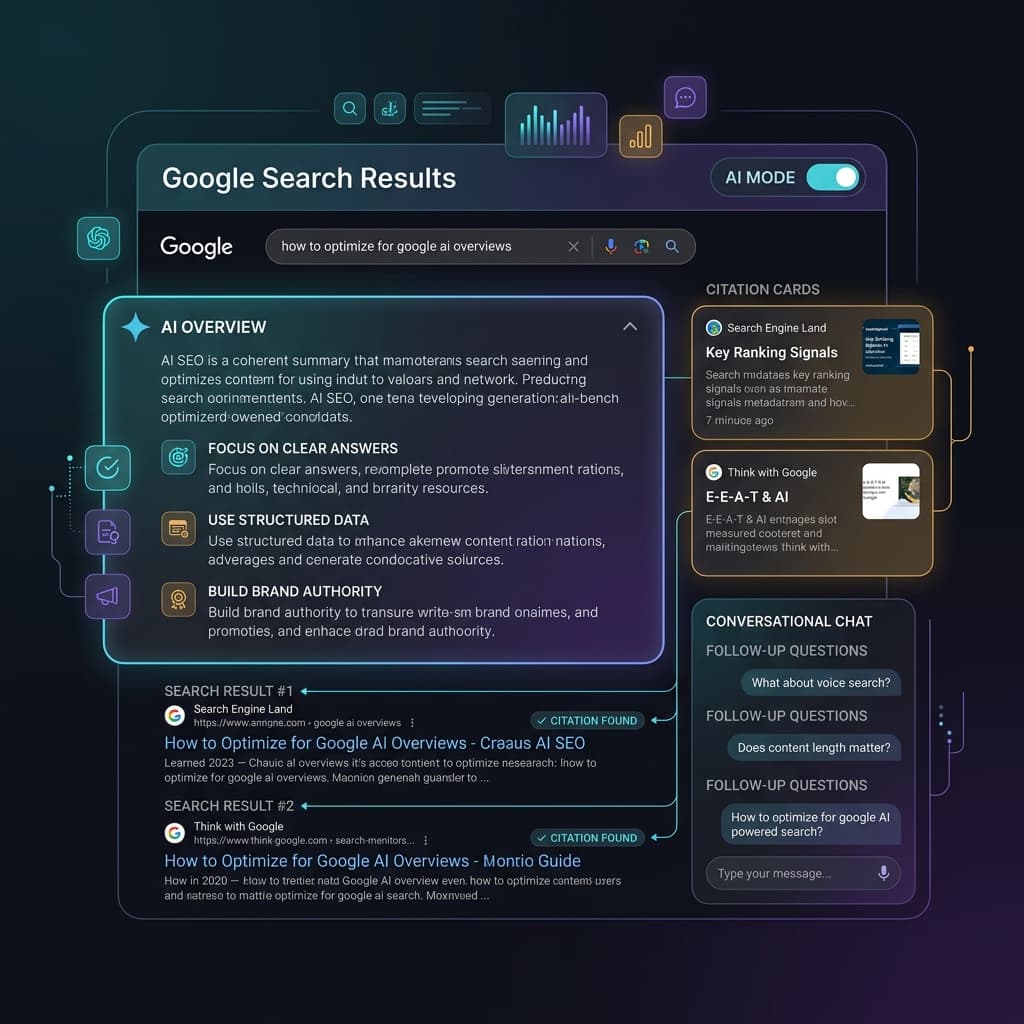
Google AI Overviews and AI Mode SEO: A Practical Visibility Framework (2026)
An in-depth guide to achieving high visibility in Google AI Overviews and AI Mode conversational search. Learn the RAG pipeline, key ranking factors, E-E-A-T requirements, and structured data optimization.

AI SEO Content Writing: Guide to Quality & Google E-E-A-T (2026)
How to use AI content writing tools (ChatGPT, Claude) for SEO without violating Google Helpful Content guidelines or losing E-E-A-T trust factors.

Measuring Content Marketing ROI: Metrics That Matter
Learn how to measure content marketing ROI with the right metrics, attribution models, and reporting frameworks that connect content to revenue.
Advertisement