B2B Content Marketing Strategy That Generates Qualified Leads
Build a B2B content marketing strategy that attracts decision-makers, nurtures them through long sales cycles, and converts them into qualified leads.

Advertisement
Key Takeaways
- B2B content must address different buyer needs at each stage of the sales cycle
- Educational content builds trust and positions your brand as an authority
- Gated content captures leads but must deliver genuine value in exchange
- Case studies and testimonials are the most convincing content types for late-stage buyers
- Content personalization by industry, role, and company size improves conversion rates
- Measure content performance by lead quality, not just volume
B2B buyers do not want to be sold to. They want to be educated. The average B2B buyer consumes three to five pieces of content before even speaking to a sales representative. By the time they reach out, they have already formed strong opinions about their needs and potential solutions.
This behavior makes content marketing the most effective channel for B2B lead generation. But not just any content. The content must address the specific needs, concerns, and questions of decision-makers throughout a complex buying process.
Understanding the B2B Buyer Journey
The B2B buying process is rarely simple. Multiple stakeholders are involved. Each stakeholder has different priorities. The technical buyer cares about features and integration. The economic buyer cares about ROI and total cost. The end user cares about usability and support.
Your content must address each stakeholder concerns at each stage of their journey.
Awareness Stage
At the awareness stage, buyers are identifying a problem or opportunity. They may not know your company exists. They are searching for information about their challenge.
Content for this stage should be educational and ungated. Blog posts, industry reports, and educational videos attract buyers who are early in their research. The goal is to get on their radar as a helpful resource, not to sell anything.
Consideration Stage
At the consideration stage, buyers have defined their problem and are evaluating approaches to solving it. They know what they need but are not sure which solution is best.
Content for this stage should compare approaches and present options. Comparison guides, webinars, white papers, and detailed case studies help buyers evaluate their choices. Some content may be gated at this stage in exchange for contact information.
Decision Stage
At the decision stage, buyers have chosen an approach and are selecting a specific vendor. They are comparing your solution against competitors.
Content for this stage should prove your value and reduce risk. Product comparisons, ROI calculators, detailed case studies with specific results, and testimonials from similar companies help buyers justify their decision to internal stakeholders.
Content Types That Generate Leads
Case Studies
Case studies are the most effective B2B content type for converting leads. A detailed case study shows how you solved a real problem for a real customer with measurable results.
Structure case studies around the customer challenge, the solution you provided, and the specific results achieved. Include quotes from the customer. Use real numbers whenever possible. A case study that shows a 40 percent reduction in cost or a 3x increase in revenue is compelling evidence.
White Papers and Research Reports
Original research positions your brand as a thought leader and generates high-quality leads. Survey your audience or analyze industry data to produce insights that are not available elsewhere.
White papers require significant investment but produce long-term returns. They attract serious buyers who are willing to exchange their contact information for valuable data.
ROI Calculators and Tools
Interactive content like ROI calculators generates highly qualified leads. Buyers who use a calculator are actively evaluating the financial impact of a solution. They are further along in the buying process than someone downloading a blog post.
Build calculators that help buyers estimate the value they would get from your solution. The output is personalized to their specific situation, which makes it more convincing than generic claims.
Webinars and Live Demos
Webinars combine education with direct engagement. They attract buyers who are actively researching solutions. The live format allows for questions and interaction.
Record webinars and make them available on demand. The replay continues to generate leads long after the live event.
Building a B2B Content Funnel
Top-of-Funnel Content
Top-of-funnel content attracts new visitors and builds awareness. Focus on educational topics that your target audience is searching for. Optimize for informational keywords rather than commercial terms.
Blog posts should answer common questions your prospects have. Industry guides should cover topics your audience needs to understand. Social media content should share insights that demonstrate expertise.
Keep top-of-funnel content ungated. The goal is maximum reach, not lead capture. Build trust first, then ask for contact information later.
Middle-of-Funnel Content
Middle-of-funnel content captures leads and nurtures them toward a decision. Gate this content behind a form to generate leads. But the content must deliver genuine value that justifies the form fill.
Offer detailed guides, templates, and tools that help buyers do their job better. The content should be useful regardless of whether the buyer chooses your solution.
Use lead magnets that are specific to your buyer personas. A template for creating an SEO strategy is more valuable to a marketing manager than a generic guide to digital marketing.
Bottom-of-Funnel Content
Bottom-of-funnel content helps buyers make a final decision. This content should be highly specific to your solution and your competitive positioning.
Product comparison pages help buyers evaluate you against competitors. Be honest about strengths and limitations. Buyers will discover limitations eventually anyway. Honesty builds trust.
Case studies and testimonials provide social proof. Feature customers who are similar to your target buyers. A case study from a company in the same industry with the same use case is more convincing than a generic success story.
Personalization and Segmentation
Generic content has limited impact in B2B marketing. Buyers expect content that addresses their specific industry, role, and challenges.
Segment your content by industry, company size, buyer role, and buying stage. Use marketing automation to deliver the right content to the right person at the right time.
Personalized content performs significantly better than generic content. A case study featuring a company in the same industry as the prospect is more convincing than a case study from a different industry.
For more on content strategy foundations, see our guide on building a data-driven content marketing strategy framework. And for creating content that resonates, see our guide on how to use AI for SEO content writing without losing the human touch.
High-Quality Content Optimization Checklist
- Verify Search Intent: Match content structure to target query type.
- E-E-A-T Assessment: Include original insights, author credentials, and fact-checked claims.
- Structured Heading Hierarchy: Use one H1, followed by H2 and H3 subsections.
- Anchor Text Relevance: Use descriptive, target-focused anchor text for internal links.
- Mobile Parity Check: Verify that mobile viewports render all key paragraphs and embeds.
Common Mistakes
- →Targeting Search Volume Over Intent: Creating high-volume informational pieces when the query has a commercial purchase intent leads to zero conversions.
- →Failing to Track Engagement Metrics: Focusing purely on organic sessions while ignoring average engagement time can hide the fact that content is thin or unhelpful.
- →Ignoring Content Decay: Publishing new posts while letting older, high-ranking pages decay without refreshes leads to a drop in overall domain visibility.
- →Publishing AI content without human editing: Raw AI output lacks personal experience and original expert points, violating search guidelines.
When This Does Not Apply
- →Breaking News Media: Real-time reporting blogs prioritizing publishing velocity do not need deep topic clusters, complex metadata, or historical updates.
- →Internal Strategy & Client Reporting: Confidential data analysis presentations or internal dashboard reports do not require public-facing metadata, indexing, or Schema markups.
Official References
Advertisement
Frequently Asked Questions
How much B2B content should be gated?
Gate 20 to 30 percent of your content. Keep educational blog posts and guides ungated. Gate high-value content like white papers, templates, and detailed guides that justify a form fill.
What is the best content type for B2B lead generation?
Case studies consistently generate the highest quality leads. They provide concrete proof of your value and help buyers justify their decision to internal stakeholders.
How long should B2B content be?
B2B buyers prefer comprehensive content. Long-form guides of 2000 to 3000 words perform better than short posts. The content must be substantive enough to demonstrate real expertise.
How do I measure B2B content marketing success?
Track lead quality as well as lead quantity. Measure conversion rates from content to opportunity to customer. Calculate cost per lead by content type to understand which content delivers the best ROI.
Should I create content for each buyer persona?
Yes. Each buyer persona has different priorities and concerns. Create content that addresses each persona specific needs. A technical buyer needs different content than an economic buyer.

Content Marketing Strategist & SEO Writer
Hannah Blake is a Content Marketing Strategist with 7+ years of experience driving organic growth for SaaS and e-commerce brands. She combines journalistic storytelling with data-driven SEO to create content that ranks, converts, and builds authority. Hannah has developed content strategies that generated over 2 million organic sessions annually for B2B technology companies, and her writing has been featured in Forbes, Entrepreneur, and Search Engine Journal. She specializes in topic cluster modeling, search intent analysis, content gap analysis, and conversion-focused content optimization. Hannah holds a degree in Journalism from the University of Cambridge and is certified in Google Analytics 4 and HubSpot Content Marketing. She regularly teaches workshops on content strategy and SEO writing for emerging marketers.
Comments are temporarily unavailable.
Stay Updated
Get the latest articles and SEO insights delivered to your inbox.
No spam. Unsubscribe anytime.
Related Articles
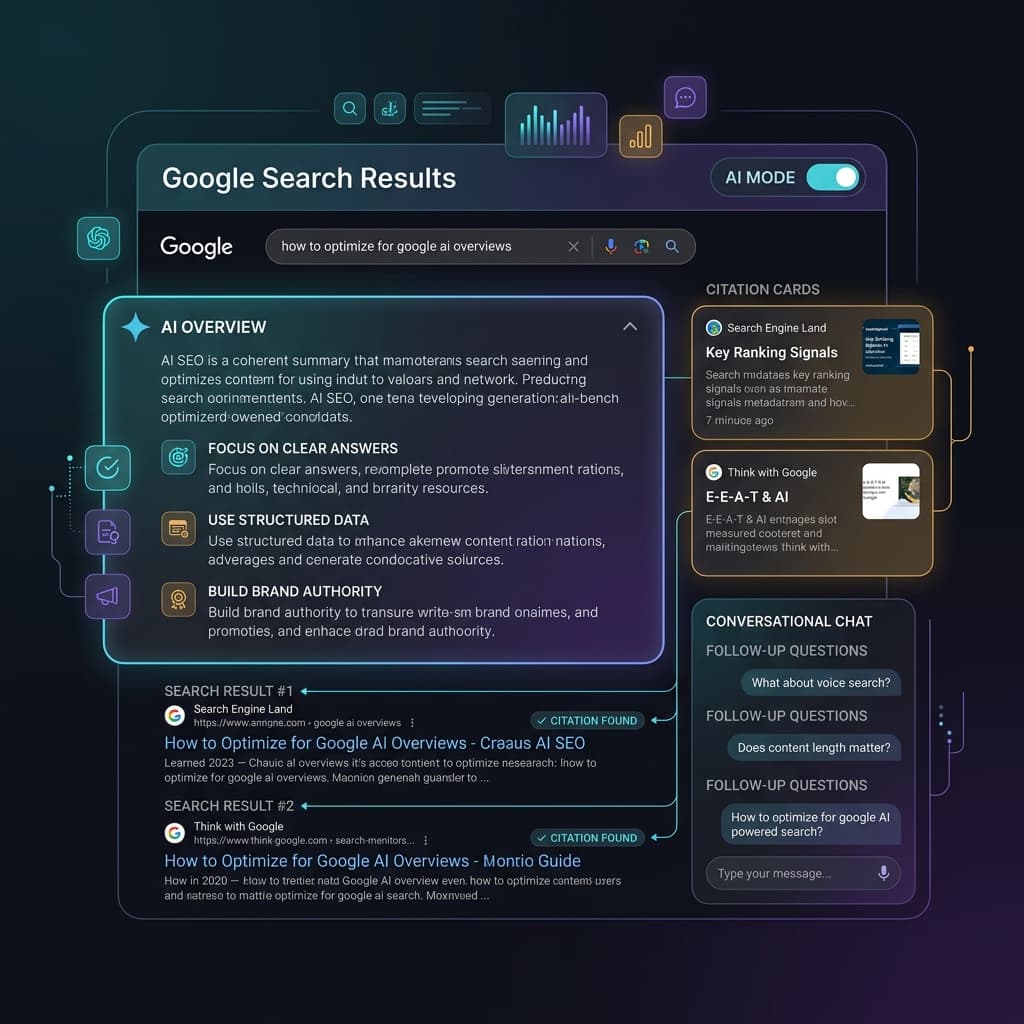
Google AI Overviews and AI Mode SEO: A Practical Visibility Framework (2026)
An in-depth guide to achieving high visibility in Google AI Overviews and AI Mode conversational search. Learn the RAG pipeline, key ranking factors, E-E-A-T requirements, and structured data optimization.

AI SEO Content Writing: Guide to Quality & Google E-E-A-T (2026)
How to use AI content writing tools (ChatGPT, Claude) for SEO without violating Google Helpful Content guidelines or losing E-E-A-T trust factors.

Measuring Content Marketing ROI: Metrics That Matter
Learn how to measure content marketing ROI with the right metrics, attribution models, and reporting frameworks that connect content to revenue.
Advertisement