How to Create SEO-Friendly Content That Readers Love
Learn the art of balancing search engine optimization with reader experience. Discover content structures, formatting techniques, and writing strategies that satisfy both audiences.

Advertisement
Key Takeaways
- Write content that answers user questions comprehensively and aligns with search intent, rather than just keyword stuffing.
- Structure articles with clear H2 and H3 headings, bullets, and short paragraphs for optimal readability.
- Add expert insights and original perspectives to satisfy Google's E-E-A-T quality guidelines.
Creating content that ranks well in search engines while genuinely helping readers requires a balanced approach. The best SEO content serves the reader first while following technical best practices.
Understanding Search Intent
Every search query has an intent behind it. Understanding whether users want information, a product, or a specific website shapes how you structure your content. Match your content format to the dominant intent for your target keywords.
Content Structure
Well-structured content helps both readers and search engines. Use clear headings to organize information, write concise paragraphs, and include relevant subheadings that naturally incorporate target keywords.
Writing for Readability
Readability affects engagement metrics that influence rankings. Write at an appropriate reading level for your audience, use short sentences, and break up text with images, bullet points, and pull quotes.
Formatting Best Practices
Use formatting to improve scannability. Bold key points, use numbered lists for steps, and include a table of contents for longer articles. These elements help readers find information quickly and increase time on page.
Conclusion
SEO-friendly content that readers love is achievable. Focus on understanding your audience, structure your content logically, and always prioritize providing genuine value over keyword optimization.
High-Quality Content Optimization Checklist
- Verify Search Intent: Match content structure to target query type.
- E-E-A-T Assessment: Include original insights, author credentials, and fact-checked claims.
- Structured Heading Hierarchy: Use one H1, followed by H2 and H3 subsections.
- Anchor Text Relevance: Use descriptive, target-focused anchor text for internal links.
- Mobile Parity Check: Verify that mobile viewports render all key paragraphs and embeds.
Common Mistakes
- →Targeting Search Volume Over Intent: Creating high-volume informational pieces when the query has a commercial purchase intent leads to zero conversions.
- →Failing to Track Engagement Metrics: Focusing purely on organic sessions while ignoring average engagement time can hide the fact that content is thin or unhelpful.
- →Ignoring Content Decay: Publishing new posts while letting older, high-ranking pages decay without refreshes leads to a drop in overall domain visibility.
- →Publishing AI content without human editing: Raw AI output lacks personal experience and original expert points, violating search guidelines.
When This Does Not Apply
- →Breaking News Media: Real-time reporting blogs prioritizing publishing velocity do not need deep topic clusters, complex metadata, or historical updates.
- →Internal Strategy & Client Reporting: Confidential data analysis presentations or internal dashboard reports do not require public-facing metadata, indexing, or Schema markups.
Official References
Advertisement
Frequently Asked Questions
How do I write content that satisfies search intent?
Analyze the top-ranking pages for your target keyword. Determine whether searchers want an informative guide, a product comparison, or a direct tool, and format your content accordingly.
What is keyword stuffing and how do I avoid it?
Keyword stuffing is the practice of overloading content with keywords in an unnatural way. Avoid it by writing for humans first, using synonyms and LSI keywords naturally.
What are LSI keywords?
Latent Semantic Indexing (LSI) keywords are contextually related search terms that help search engines understand the topic depth and context of your page.

Content Marketing Strategist & SEO Writer
Hannah Blake is a Content Marketing Strategist with 7+ years of experience driving organic growth for SaaS and e-commerce brands. She combines journalistic storytelling with data-driven SEO to create content that ranks, converts, and builds authority. Hannah has developed content strategies that generated over 2 million organic sessions annually for B2B technology companies, and her writing has been featured in Forbes, Entrepreneur, and Search Engine Journal. She specializes in topic cluster modeling, search intent analysis, content gap analysis, and conversion-focused content optimization. Hannah holds a degree in Journalism from the University of Cambridge and is certified in Google Analytics 4 and HubSpot Content Marketing. She regularly teaches workshops on content strategy and SEO writing for emerging marketers.
Comments are temporarily unavailable.
Stay Updated
Get the latest articles and SEO insights delivered to your inbox.
No spam. Unsubscribe anytime.
Related Articles
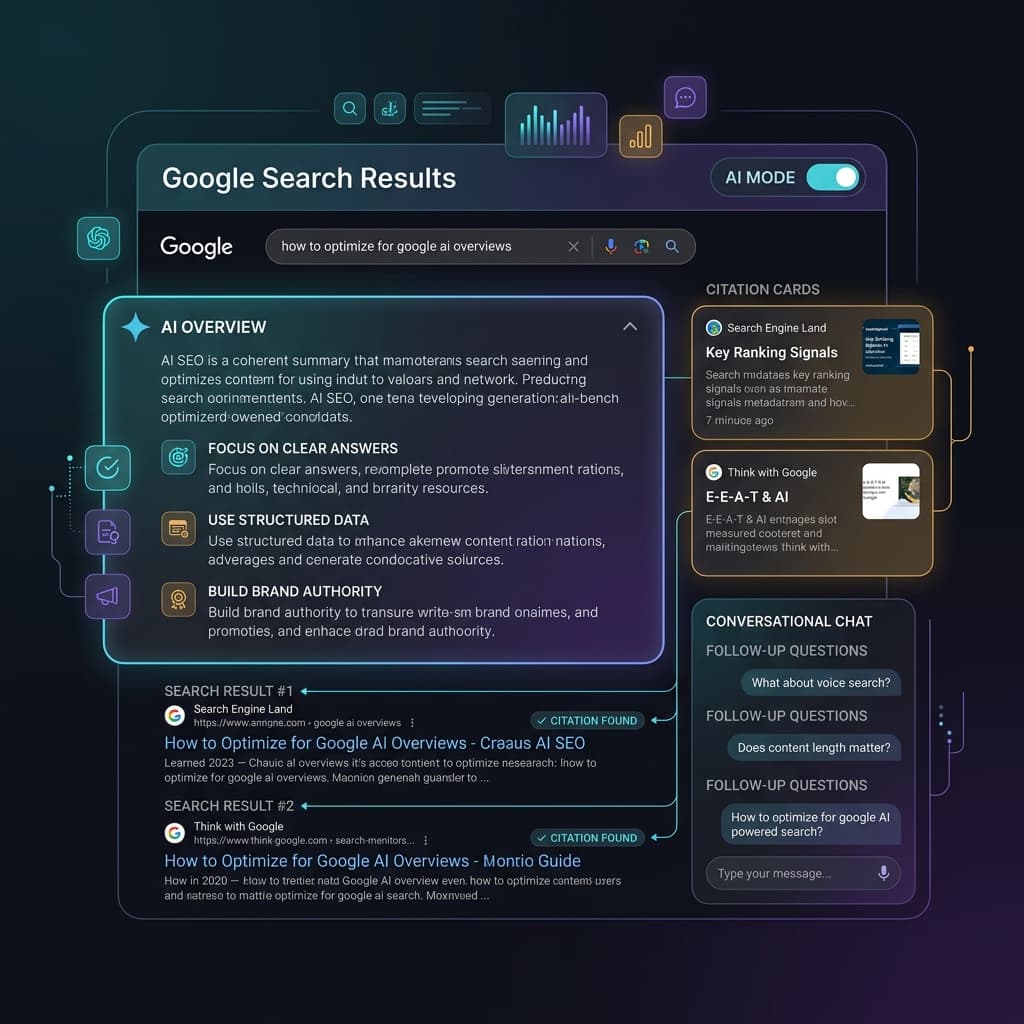
Google AI Overviews and AI Mode SEO: A Practical Visibility Framework (2026)
An in-depth guide to achieving high visibility in Google AI Overviews and AI Mode conversational search. Learn the RAG pipeline, key ranking factors, E-E-A-T requirements, and structured data optimization.

AI SEO Content Writing: Guide to Quality & Google E-E-A-T (2026)
How to use AI content writing tools (ChatGPT, Claude) for SEO without violating Google Helpful Content guidelines or losing E-E-A-T trust factors.

Measuring Content Marketing ROI: Metrics That Matter
Learn how to measure content marketing ROI with the right metrics, attribution models, and reporting frameworks that connect content to revenue.
Advertisement