Content Refresh Strategy: Reviving Underperforming Pages
Systematically identify and refresh underperforming content to reclaim lost traffic, improve rankings, and maximize the ROI of your existing content library.

Advertisement
Key Takeaways
- Refreshing existing content often delivers better ROI than creating new content
- Identify refresh candidates by analyzing traffic declines, ranking drops, and content decay
- Updates should address outdated information, improve comprehensiveness, and optimize formatting
- A refreshed piece of content can regain or exceed its original traffic levels
- Maintain a refresh cadence for your most important content pages
- Track performance before and after refreshes to measure impact
Your old content is a goldmine. Most content marketing teams focus entirely on creating new content while ignoring the assets they already have. This is a mistake. Refreshing existing content often delivers better ROI than creating new content from scratch.
A content refresh strategy systematically identifies underperforming pages, updates them with current information, and repromotes them to regain lost traffic and improve rankings.
Why Content Refreshing Works
Content naturally decays over time. Statistics become outdated. New information becomes available. Competitors publish newer, better content. Links break. The content that drove traffic six months ago may now be ranking on page three.
Refreshing content reverses this decay. It signals to search engines that the content is current and maintained. It provides readers with up-to-date information. It reclaims traffic that has been lost to newer content from competitors.
The Efficiency Argument
Creating a new article takes six to ten hours from research to publication. Refreshing an existing article takes one to three hours. You already have the structure, the URL, and any existing backlinks. The refresh builds on what exists rather than starting from nothing.
The ROI of refreshing is often higher than creating new content because the foundation is already in place. Existing backlinks continue to pass authority. The URL may already rank for related terms. A refresh can boost that existing foundation.
Identifying Refresh Candidates
Traffic Declines
Use Google Analytics or Search Console to identify pages with declining traffic. Look for pages that had strong traffic three to six months ago but have seen a steady decline.
Set up a filter for pages that lost more than 20 percent of their organic traffic over the past three months. These pages are your highest priority refresh candidates. The traffic decline indicates that something has changed, and the content needs attention.
Ranking Drops
Check your rank tracking data for pages that have dropped in search results. A page that went from position three to position fifteen needs a refresh. Something caused the ranking drop, and updating the content is the most likely fix.
Compare current rankings to rankings from three and six months ago. Pages with consistent declines over both periods are urgent refresh candidates.
Content Decay Analysis
Content decay refers to the natural decline in traffic that occurs as content ages. Even well-optimized content decays over time as newer content enters the market.
Use tools like Ahrefs or SEMrush to identify decaying content. These tools show which pages have lost traffic over time and estimate the potential recovery from a refresh.
The Refresh Process
Step 1: Audit the Current Content
Start by understanding why the content is underperforming. Read the current content critically. What information is outdated? What is missing? What could be improved?
Check the current search results for the target keywords. What are the top-ranking pages doing that your page does not? What format are they using? How comprehensive are they? What subtopics do they cover that your page misses?
Step 2: Plan the Updates
Based on your audit, plan specific updates. List outdated statistics that need replacement. Identify sections that need expansion. Note formatting improvements like adding a table of contents or better headings.
Prioritize updates that will have the biggest impact. Adding a comprehensive section that competitors cover but you do not is more impactful than minor wording changes.
Step 3: Execute the Refresh
Update the content with current information. Replace old statistics with new data. Add missing sections. Improve formatting and readability. Update internal links to point to your best current content.
Do not change the URL unless absolutely necessary. Preserving the URL preserves existing backlinks and ranking signals. If you must change the URL, implement a 301 redirect from the old URL to the new one.
Step 4: Update Metadata
Update the published date to reflect the refresh. Update the meta title and description if the content direction has changed. Check that the target keywords are still appropriate and update if needed.
Do not change the URL slug unless the topic has fundamentally changed. Preserving the slug preserves any existing ranking signals for that URL.
Step 5: Repromote
Treat refreshed content like new content. Promote it through your regular distribution channels. Email your newsletter subscribers. Share on social media. Reach out to sites that linked to the original version and let them know about the update.
A content refresh deserves the same promotional effort as a new piece because the refreshed content has the potential to generate significant traffic.
Measuring Refresh Success
Track the performance of refreshed content for at least 30 days after the update. Compare traffic, rankings, and engagement metrics to the 30 days before the refresh.
A successful refresh shows traffic recovery within two to four weeks. Rankings may take longer to improve, especially for competitive keywords. Monitor monthly for at least three months to assess the full impact.
Document your refresh results. Which types of refreshes deliver the best results? How long does recovery take? This data helps you prioritize future refresh efforts.
For more on using data to guide content decisions, see our guide on using analytics data to optimize your content performance. And for building a content strategy that minimizes the need for major refreshes, see our guide on building a data-driven content marketing strategy framework.
High-Quality Content Optimization Checklist
- Verify Search Intent: Match content structure to target query type.
- E-E-A-T Assessment: Include original insights, author credentials, and fact-checked claims.
- Structured Heading Hierarchy: Use one H1, followed by H2 and H3 subsections.
- Anchor Text Relevance: Use descriptive, target-focused anchor text for internal links.
- Mobile Parity Check: Verify that mobile viewports render all key paragraphs and embeds.
When This Does Not Apply
- →Breaking News Media: Real-time reporting blogs prioritizing publishing velocity do not need deep topic clusters, complex metadata, or historical updates.
- →Internal Strategy & Client Reporting: Confidential data analysis presentations or internal dashboard reports do not require public-facing metadata, indexing, or Schema markups.
Official References
Advertisement
Frequently Asked Questions
How often should I refresh content?
Refresh your most important content quarterly. Refresh supporting content every six to twelve months. Conduct a full content audit annually to identify all refresh candidates.
What types of content benefit most from refreshing?
Evergreen content with declining traffic benefits most. Content that ranks for competitive keywords is also high priority because small improvements can significantly impact rankings.
Does refreshing content reset its SEO value?
No. Refreshing signals to search engines that the content is current, which can improve rankings. It does not reset the content authority or lose existing backlink value.
Should I change the URL when refreshing?
No. Preserve the URL to maintain existing backlinks and ranking signals. Only change the URL if the content topic has fundamentally changed.
How do I know if a refresh was successful?
Compare traffic, rankings, and engagement metrics for 30 days before and after the refresh. A successful refresh shows traffic recovery and ranking improvements within two to four weeks.

Content Marketing Strategist & SEO Writer
Hannah Blake is a Content Marketing Strategist with 7+ years of experience driving organic growth for SaaS and e-commerce brands. She combines journalistic storytelling with data-driven SEO to create content that ranks, converts, and builds authority. Hannah has developed content strategies that generated over 2 million organic sessions annually for B2B technology companies, and her writing has been featured in Forbes, Entrepreneur, and Search Engine Journal. She specializes in topic cluster modeling, search intent analysis, content gap analysis, and conversion-focused content optimization. Hannah holds a degree in Journalism from the University of Cambridge and is certified in Google Analytics 4 and HubSpot Content Marketing. She regularly teaches workshops on content strategy and SEO writing for emerging marketers.
Comments are temporarily unavailable.
Stay Updated
Get the latest articles and SEO insights delivered to your inbox.
No spam. Unsubscribe anytime.
Related Articles
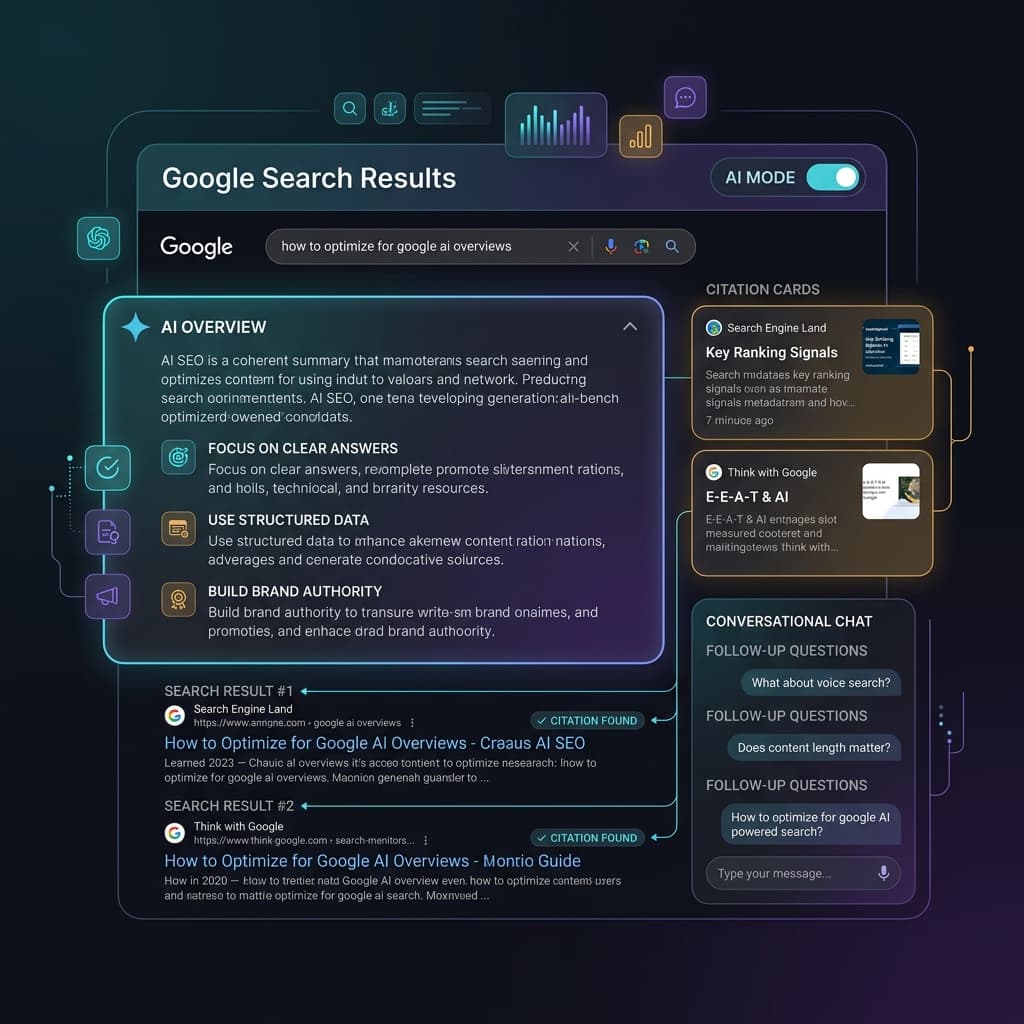
Google AI Overviews and AI Mode SEO: A Practical Visibility Framework (2026)
An in-depth guide to achieving high visibility in Google AI Overviews and AI Mode conversational search. Learn the RAG pipeline, key ranking factors, E-E-A-T requirements, and structured data optimization.

AI SEO Content Writing: Guide to Quality & Google E-E-A-T (2026)
How to use AI content writing tools (ChatGPT, Claude) for SEO without violating Google Helpful Content guidelines or losing E-E-A-T trust factors.

Measuring Content Marketing ROI: Metrics That Matter
Learn how to measure content marketing ROI with the right metrics, attribution models, and reporting frameworks that connect content to revenue.
Advertisement